
Cabinet Of Electrical Curiosities – Mark Dion
Related products


Product detailed description
When Kunsthalle Praha was being transformed from the former Zenger electrical substation, numerous historical artifacts were uncovered — light bulbs, batteries, a motor, even an old issue of ZEPOP (Electric Companies News of Prague). Multimedia artist Mark Dion turned these into a permanent installation called the “Cabinet of Electrical Curiosities.” This print, rendered in his signature red and blue, is a reproduction of the cabinet’s original sketch. Limited to 50 signed and numbered pieces, including a certificate. Frame not included.
| Artist | Mark Dion |
| Print Technique | Giclée |
| Material | Hahnemühle William Turner 310 gsm |
| Dimensions | 30 × 40 cm |
| Edition | 50 pieces, signed and numbered |
| Year | 2021 |
Mark Dion
American multimedia artist Mark Dion incorporates archaeology, ecology and science into his works. He is best known for his cabinets of curiosities, including installations at Tate Gallery, MoMA and Centre Pompidou. His only permanent exhibition in the Czech Republic – the Cabinet of Electrical Curiosities – is on display at Kunsthalle Praha.
Additional parameters
| Category: | Limited editions |
|---|---|
| Warranty: | 2 years |
| Weight: | 4.01 kg |
| Artist: | Mark Dion |
| Categories: | giclée prints |
| Price range: | €200 – €400 |
| Products: | limited editions |
| Exhibition: | Past exhibitions |
Be the first who will post an article to this item!
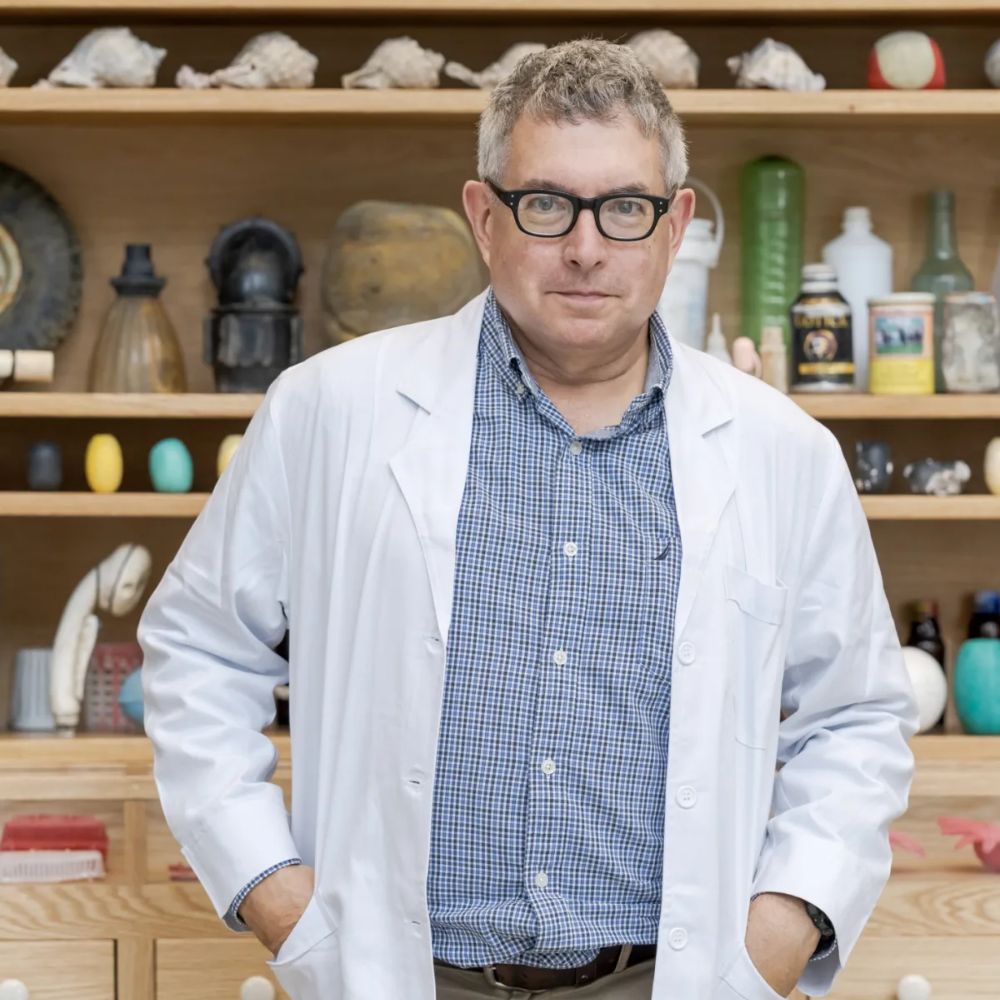
Mark Dion is an American artist whose work investigates how dominant ideologies and public institutions shape our understanding of nature, history and knowledge. Dion believes that the role of the artist is to move against the grain of dominant culture — to question conventions, challenge perception and expose the assumptions behind established systems.
Drawing on archaeological, ecological and scientific methods of collecting, cataloguing and exhibiting objects, Dion critiques the perceived divide between objective science and subjective interpretation. His spectacular curiosity cabinets, inspired by the Wunderkammer of the 16th and 17th centuries, celebrate unconventional orders, hybrid knowledge and playful taxonomies.
Dion frequently collaborates with natural history museums, aquariums, zoos and other institutions responsible for producing public knowledge about nature. Through these collaborations, he examines how scientific authority is constructed and how social agendas, ideology and pseudo-science enter the creation of public discourse.
By tracing the cultural foundations of environmental politics and public policy, Dion reveals how our relationship to nature is shaped as much by narrative and institutional frameworks as by empirical data — a perspective that places his work at the intersection of art, science and critical inquiry.