
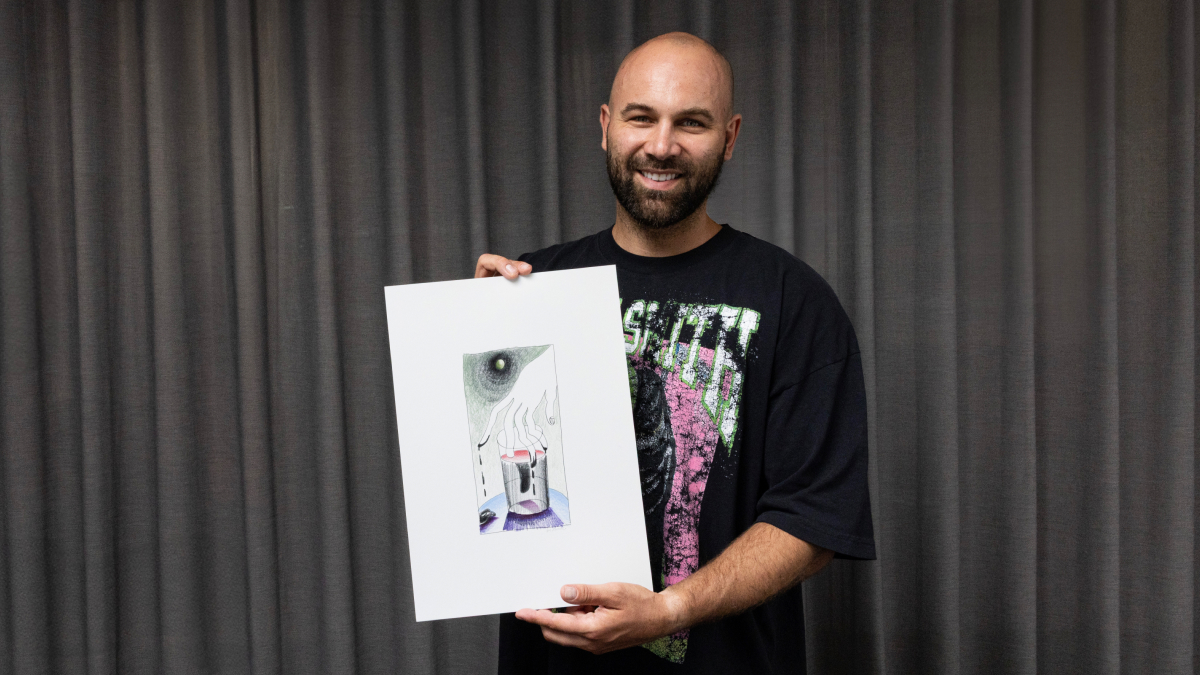
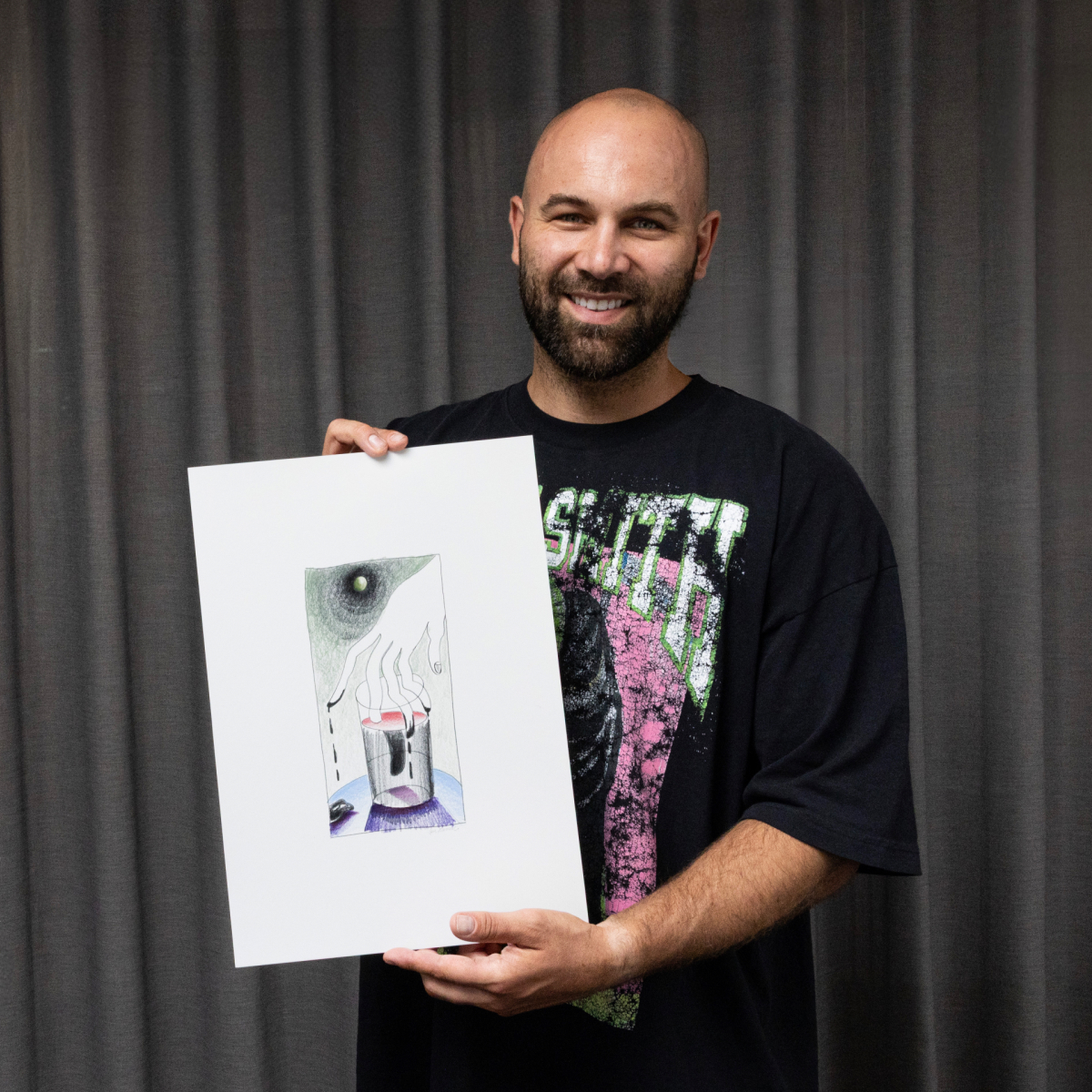
“When you're feeling vulnerable, you're naturally drawn to fragile things. On one hand, you seek shelter; on the other, you search for strength within yourself.” In our interview, painter Igor Hosnedl reflects on the personal impulses and emotions behind his new limited edition series of drawings created exclusively for Kunsthalle Praha.
Interview with Igor Hosnedl
Your large-scale paintings are probably what most people know you for. However, you originally studied drawing. What role does drawing play in your practice?
Igor: Drawing was the very first medium through which I communicated, long before I ever attempted painting. From the very beginning, it has been my primary means of expression, and in many ways it still is today. Over time, I gradually developed my visual language through painting, but drawing remains the truest of all the forms of expression I use.
The Personal Dimension of His Practice
How would you describe what interests you in painting and artistic practice more broadly? What are the main themes and impulses behind your work?
Igor: My most recent solo exhibition, Milky Way (at Eigen + Art gallery in Leipzig), naturally became very personal. Perhaps even so personal that, to a certain extent, it documents my own life—and I'm still not sure whether that's a good thing or not. It reflects the directness of the kind of art I make. In the past, art was a place where I could hide, where I could think about things in a more nuanced way. At the same time, it also allowed me to hide behind my own work.
During my first years in Berlin, some people even assumed my paintings had been made by a woman. The idea of hiding my large physical presence behind something delicate fascinated me. For a long time, I wasn't able to make a living as an artist. I worked manual jobs while my mind was constantly occupied with thoughts about art—thoughts that felt completely disconnected from what I was doing at the time. Art still represents an ever-expanding possibility for me to retreat into a beautiful, fragile world.
.jpg)
Colour as Part of a Personal Language
You create your own paints and mix your own pigments. How did you develop the need to create your own method or technique?
Igor: When I first started painting, I had to work in order to afford art supplies. I didn't come from a background that allowed me to simply create while being financially supported, and that never felt natural to me anyway. Ironically, by the time I could finally afford paints, I wasn't ready for them. I would immediately mix together all those beautiful acrylic and oil colours simply because they were sitting next to my canvas, but I couldn't achieve a palette that felt right. Having every possibility available at once actually became a creative obstacle.
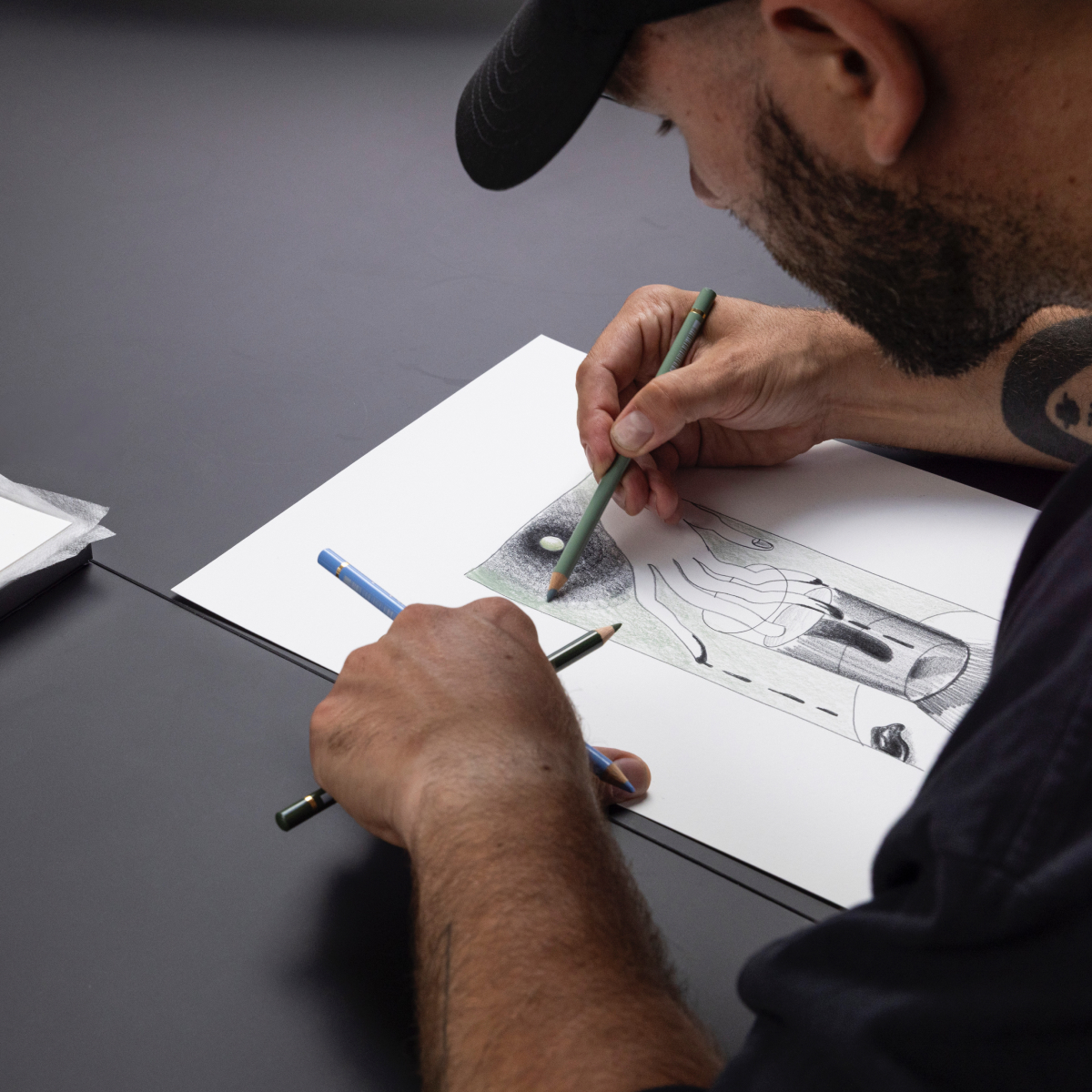
Grinding soft pastels into powder and mixing pigments—which took a considerable amount of time—along with the quiet process of preparation itself, somehow taught me to approach colour more slowly. The fact that I couldn't have everything instantly helped me learn how to combine colours more thoughtfully. That was probably twelve years ago, and I still work that way today. Nowadays I also use acrylics alongside my pigments, and it no longer presents the same challenge. I suppose it simply took me a long time to understand colour.
Every artist communicates through materials that eventually become something else on the canvas. The ultimate goal is for the medium itself to disappear. I'm fascinated by paintings in which the material aspects recede completely into the background. The materials themselves simply vanish.
A Sensitivity to Colour
Has this process given you a different sensitivity to colour and its nuances?
Igor: That's a great question. The pigments I work with come from dry pastels intended for drawing, which I grind into powder. The range of colours is broad, but the possibilities for mixing them are naturally more limited. When your means are limited, you try to get the most out of what you have. Since I started combining pigments with acrylics, my palette has shifted slightly. Acrylic also helps me bring out finer details that pigments mixed with binder simply can't achieve.
Even so, I often return to my original technique and realise it isn't so inadequate after all. In fact, I frequently put the acrylics aside and go back to what feels familiar and what I know best. The quality of the pigments is surprisingly high. It definitely influences the colour palette—without question.
Born in Blue Body
Could you tell us more about the series of drawings you selected for the Kunsthalle Praha edition?
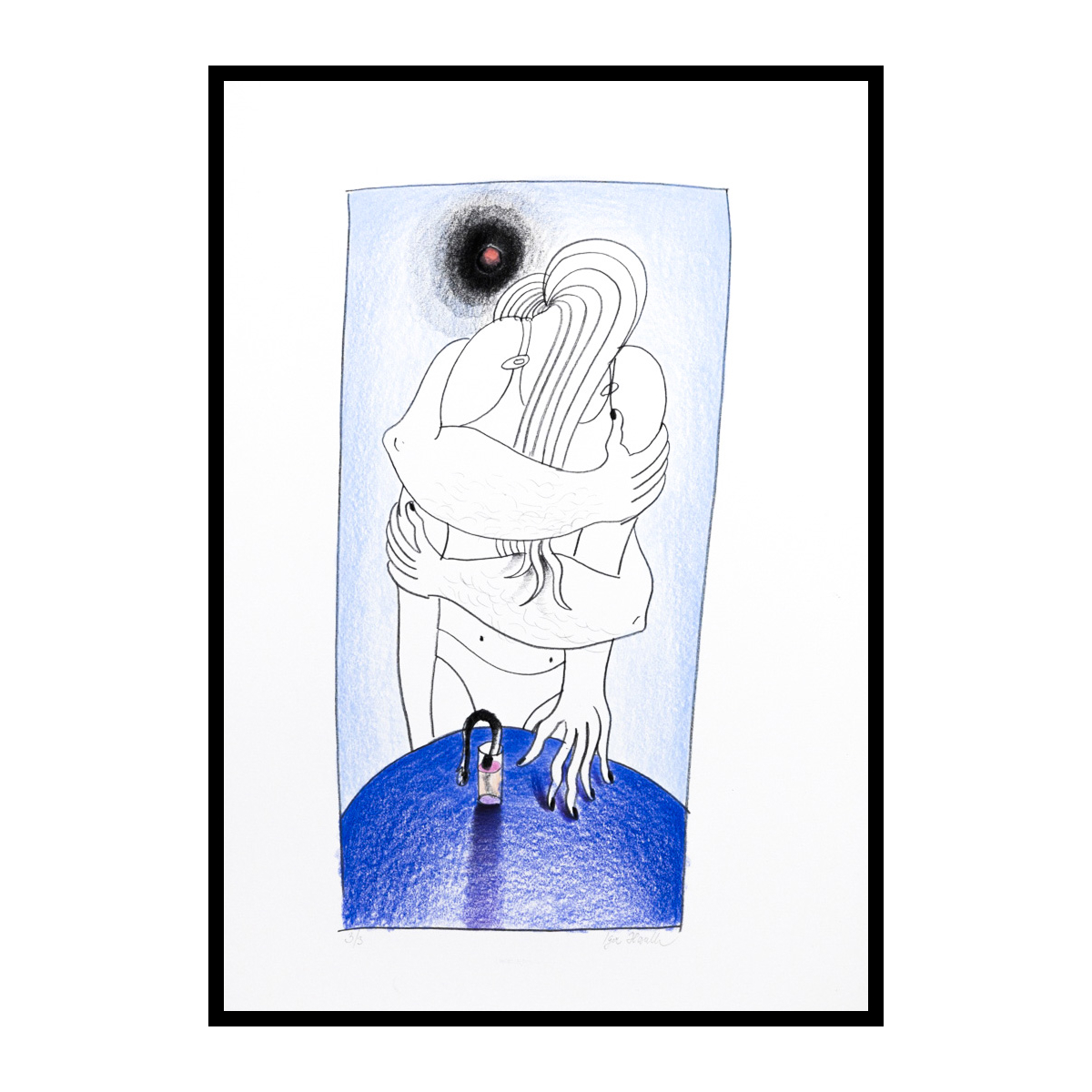
Igor: The series is closely connected to my exhibition Born in Blue Body, which was presented at Eigen + Art gallery in 2023. It all began while I was listening to the music of Daniel Johnston. He was a truly unique artist associated with the movement known as New Sincerity. His music is incredibly powerful. He passed away in 2019, but his story remains extraordinary for its honesty and sensitivity. He was self-taught, worked at McDonald's, and collected cassette tapes distributed by Jehovah's Witnesses, recording his own songs over them. His music reflects his struggle with severe mental illness and the immense challenges that came with it. There's something deeply compelling about such an honest artistic statement expressed through a chosen medium. Perhaps that's also why he inspired so many well-known musicians, including Kurt Cobain.
The entire series is therefore connected to the music I was listening to at the time, but it is equally rooted in a particularly difficult period of my personal life. It feels natural that when you're emotionally vulnerable, you're drawn to fragile things that resonate with your state of mind, reinforcing those emotions even further. On one hand, you seek shelter; on the other, you search for strength within yourself.
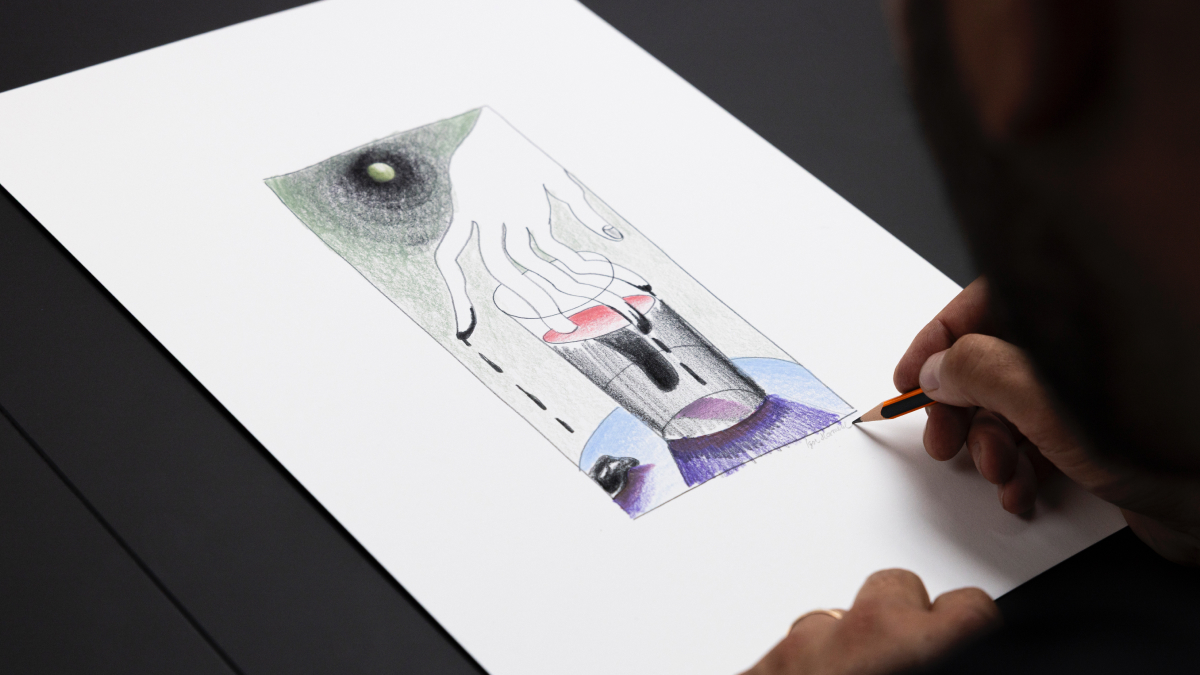
The group of drawings created for Kunsthalle Praha naturally continues the body of work first presented in the exhibition. It was a particular kind of personal statement. I usually work in large batches, producing one drawing after another without making corrections. There are often fifty or more. For Born in Blue Body, I selected several drawings that I later transformed and developed into other forms, focusing on the moments that interested me most. The original drawings, however, were created in a very different emotional state. That's precisely why I'm so pleased this new series came into being. It builds upon the fragility of that earlier period while also feeling stronger, simply because I'm creating it from a different place mentally. Yet the original idea still survives within these works, and that's what I find so rewarding.
A Personal Touch in Every Print
What makes these new editions unique?
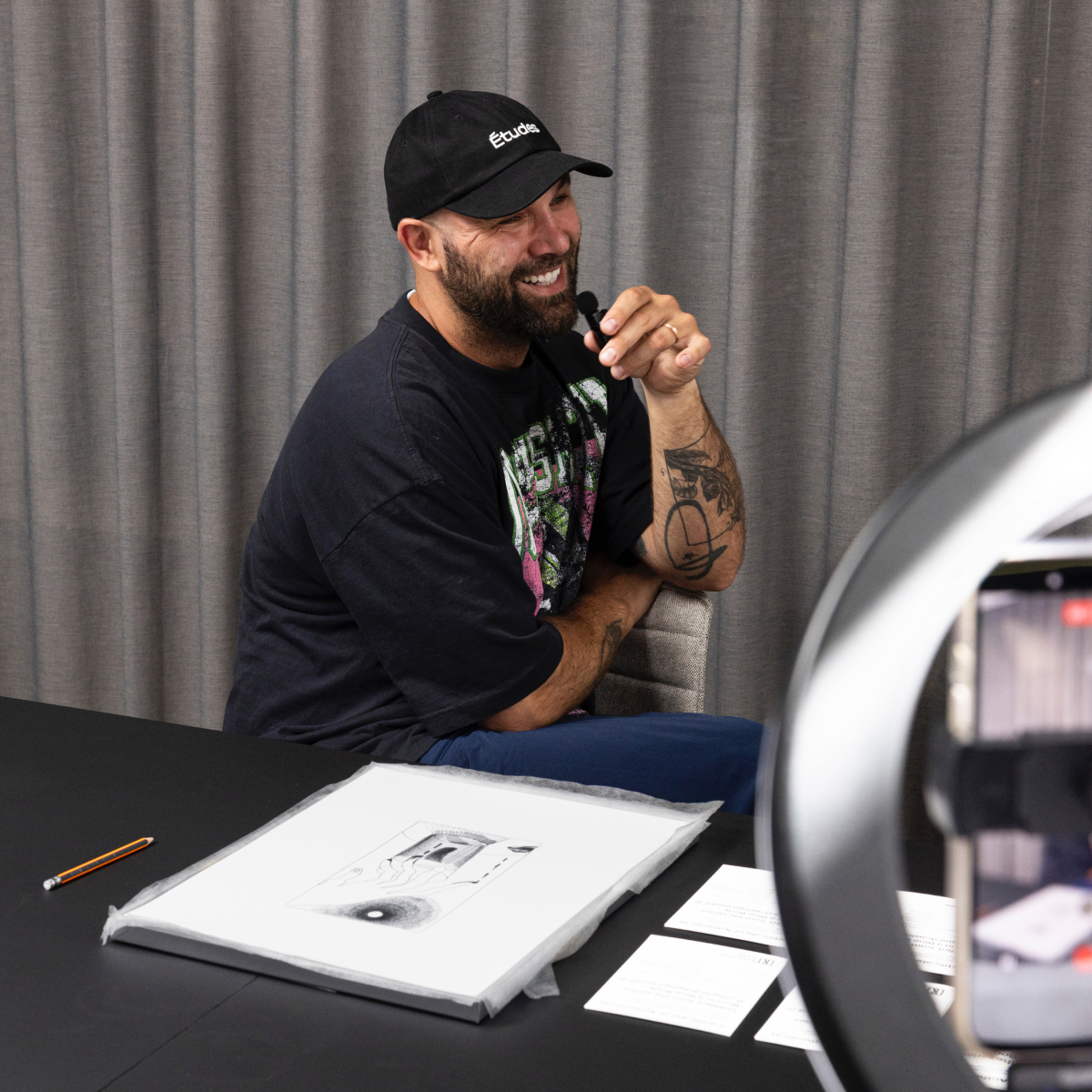
Igor: I return to each print—beautifully reproduced on fine paper—and add another coloured layer by hand. In doing so, I extend the original drawing and allow it to continue evolving through my own thoughts. It's a personal gesture that I bring to every single print, and I'm really looking forward to working on them.
Working with Kunsthalle Praha
How was your experience collaborating with curator Tevž Logar and the Kunsthalle Praha team on the current exhibition?
Igor: It's incredibly important to me because this is my first institutional exhibition in the Czech Republic. Kunsthalle Praha is an architecturally beautiful space, and I'm really looking forward to seeing the exhibition installed there. Working with Tevž has been wonderful. He visited me in my studio, and together we discussed the entire concept behind the works I'm presenting. I'm delighted to be part of this group exhibition.
About the Artist
Igor Hosnedl (b. 1988) is one of the leading figures of the contemporary Czech painting scene. His practice moves between painting and drawing, creating imagined worlds that feel both familiar and strangely unsettling. His works balance sensuality, fragility, and quiet unease through subtle shifts in colour, delicate linework, and a highly distinctive visual language.
Hosnedl studied drawing and painting at the Academy of Fine Arts in Prague between 2007 and 2013. His artistic practice is characterised by a unique painting technique based on mixing his own pigments, resulting in carefully balanced colour palettes and the evocative atmosphere that has become a hallmark of his work.
His work has been presented in solo and group exhibitions at institutions and galleries including Eigen + Art (Leipzig), Kunsthalle Bratislava, Künstlerhaus Bethanien (Berlin), Nicodim Gallery (Bucharest), and hunt kastner (Prague). His works are currently on view in the exhibition Memory of Touch: Chapter I at Kunsthalle Praha.